
Weight Loss Hypnotherapy in Carlsbad, CA
If you know what you should eat but still find yourself stuck in the same cycles, the problem is not willpower. It is subconscious programming. Brooke's Mind Therapy offers weight loss hypnotherapy in Carlsbad, CA that works beneath the level of conscious effort, addressing the eating habits hypnosis cannot reach through dieting or discipline alone. Whether you are dealing with food noise, emotional eating, or fear of weight regain, conversational hypnotherapy gets to the root of what is driving the pattern.
Weight Loss in North San Diego County
The Problem Is Not What You Are Eating. It Is Why.
Most weight management approaches focus on what goes on the plate. Conversational hypnotherapy focuses on what is happening in the mind before you ever reach the kitchen. Subconscious eating patterns, including the urge to eat when stressed, bored, or anxious, are not character flaws. They are deeply wired behavioral routines that conscious effort alone rarely changes. Brooke Pollind, a Certified Hypnotherapist (CHT) and Holistic Health Practitioner (HHP) with over 26 years of holistic health experience, works directly with the subconscious mind to identify and interrupt those routines. By addressing the underlying triggers rather than the surface behavior, the work produces changes that feel natural rather than forced.

What Keeps the Cycle Going
Food Noise, Emotional Eating, and the Fear of Regain
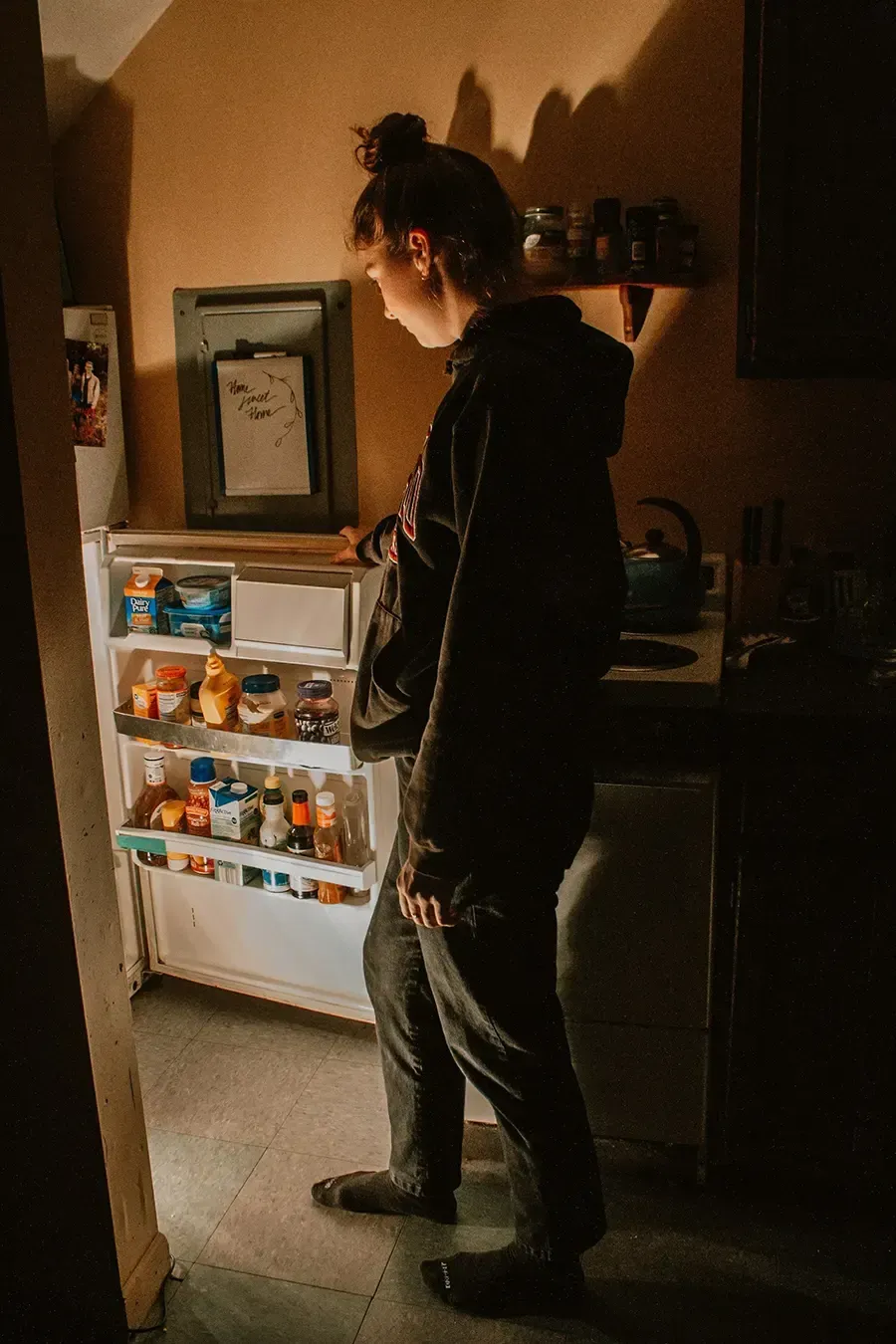
Food noise is the persistent internal chatter that keeps your attention fixed on eating even when you are not hungry. It can feel like a background hum that never fully quiets, making sustainable weight management hypnotherapy a far more effective path than another round of tracking or restriction. Emotional eating follows a similar pattern: a feeling arises, and the automatic response is to reach for food before the conscious mind has a chance to intervene. For clients transitioning off GLP-1 medications or weight loss peptides, these subconscious patterns often resurface once the medication's appetite-suppressing effect fades. Brooke's conversational approach addresses the underlying programming so that the results of your efforts hold over the long term, not just while external support is in place.
A Different Kind of Mindful Eating Therapy
No Scripts. No Homework. No Forced Relaxation.
Brooke's approach to mindful eating therapy is grounded in natural, high-level conversation rather than rigid scripts or memorized affirmations. There are no pendulums, no staged trances, and no list of exercises to complete between sessions. The organic trance state that supports this work is reached through targeted questioning, not forced relaxation. Think of the subconscious mind as a set of gears that have become rusted in place over years of repetition. The conversational process works to get those gears moving again, restoring the natural connection between your intentions and your actions. Clients typically see measurable results within one to four sessions, making this a practical option for high achievers who need results without adding to their workload.


Who This Work Is For
Built for Driven People Who Are Ready to Stop Repeating the Same Pattern
This service is particularly well-suited for entrepreneurs, business owners, and high achievers who have tried conventional approaches and found that logic alone does not override the pull of automatic habits. If you understand nutrition, you have read the books, and you still find yourself eating in ways that do not match your goals, the gap is not information. It is subconscious programming that has not caught up with your conscious intentions. Brooke's eating habits hypnosis model meets you exactly where you are, without judgment and without a one-size-fits-all formula. The process is built around your specific triggers, your history, and your goals, because no two people arrive at the same pattern for the same reason.
New Title
New Paragraph
How is hypnotherapy different from a diet or nutrition program for weight loss?
Diet and nutrition programs work at the level of conscious decision-making, telling you what to eat and when. Hypnotherapy works at the subconscious level, where the automatic behaviors and emotional triggers that drive overeating actually live. If you already know what you should be doing but cannot consistently follow through, the issue is likely subconscious programming rather than a lack of information. Brooke's conversational approach addresses those root-level patterns directly, which is why clients often experience changes that feel more automatic and lasting compared to willpower-based methods.What is food noise and can hypnotherapy reduce it?
Food noise refers to the persistent mental chatter about eating that occurs even when you are not physically hungry. It can feel like a constant background pull toward food, making it difficult to focus on work, relationships, or anything else. Brooke's conversational hypnotherapy targets the subconscious patterns that generate this noise. By working beneath the level of conscious thought, the sessions aim to quiet that internal chatter so that eating decisions feel more intentional and less automatic. This is one of the specific concerns addressed within her weight and eating habits service.Can hypnotherapy help after stopping GLP-1 or weight loss peptide medications?
Yes, this is one of the specific situations Brooke's weight loss hypnotherapy is designed to support. GLP-1 medications can suppress appetite significantly while in use, but the subconscious eating patterns that existed before the medication often return once it is discontinued. Conversational hypnotherapy works to address those underlying patterns so that clients are not dependent on the medication's appetite-suppressing effect to maintain their results. The goal is to align the subconscious programming with the client's intentions so that healthier habits hold on their own.How many sessions does it typically take to see results?
Brooke's model is built around a one to four session average for measurable results. The exact number varies depending on the individual, the specific patterns being addressed, and how long those patterns have been in place. The approach is designed to be efficient, which is particularly important for clients who are already managing full schedules. There is no requirement for ongoing weekly sessions indefinitely. The conversational process aims to produce shifts that the subconscious mind continues to integrate after the session itself.Do I need to do homework or practice affirmations between sessions?
No. Brooke's model does not require clients to memorize affirmations, complete repetitive exercises, or follow a structured routine between sessions. The subconscious mind processes the work that happens during the session itself. This is intentional and is one of the key differences between conversational hypnotherapy and other approaches. For high achievers and busy professionals, removing the homework requirement means the process does not add to an already full workload, while still producing the kind of subconscious shifts that support lasting change.Is this approach appropriate for someone who is skeptical about hypnosis?
Skepticism is quite common among the clients Brooke works with, and the conversational model is well-suited for it. The approach does not involve swinging objects, scripted inductions, or anything resembling stage hypnosis. Instead, it uses targeted, high-level questioning to reach a natural trance state through dialogue. Brooke's 26-plus years of holistic health experience, including work alongside clinical professionals, grounds the practice in a body-mind framework that tends to resonate with analytically minded individuals who want a professional, grounded process rather than a mystical one.Are sessions available virtually, or do I need to visit the Carlsbad office?
Sessions are available both in person at the Carlsbad location and virtually via Zoom, making the service accessible to clients throughout North San Diego County and beyond. The virtual format does not diminish the effectiveness of the conversational approach, as the work is dialogue-based rather than dependent on a physical setting. This flexibility is particularly useful for clients with demanding schedules who may not always be able to attend an in-person appointment.What is the Request to Book process and why is it required?
Before scheduling a session, prospective clients go through a mandatory Request to Book intake process. This step exists to ensure that Brooke's conversational hypnotherapy model is genuinely the right fit for the client's specific needs and goals. It is not a barrier to access but rather a way to confirm alignment between what the client is looking for and what the conversational approach delivers. A free 30-minute discovery call via Zoom is also available as a lower-barrier first step for anyone who wants to ask questions before committing to a session.
Common Questions
What People Ask About Weight Loss Hypnotherapy

Client Feedback